


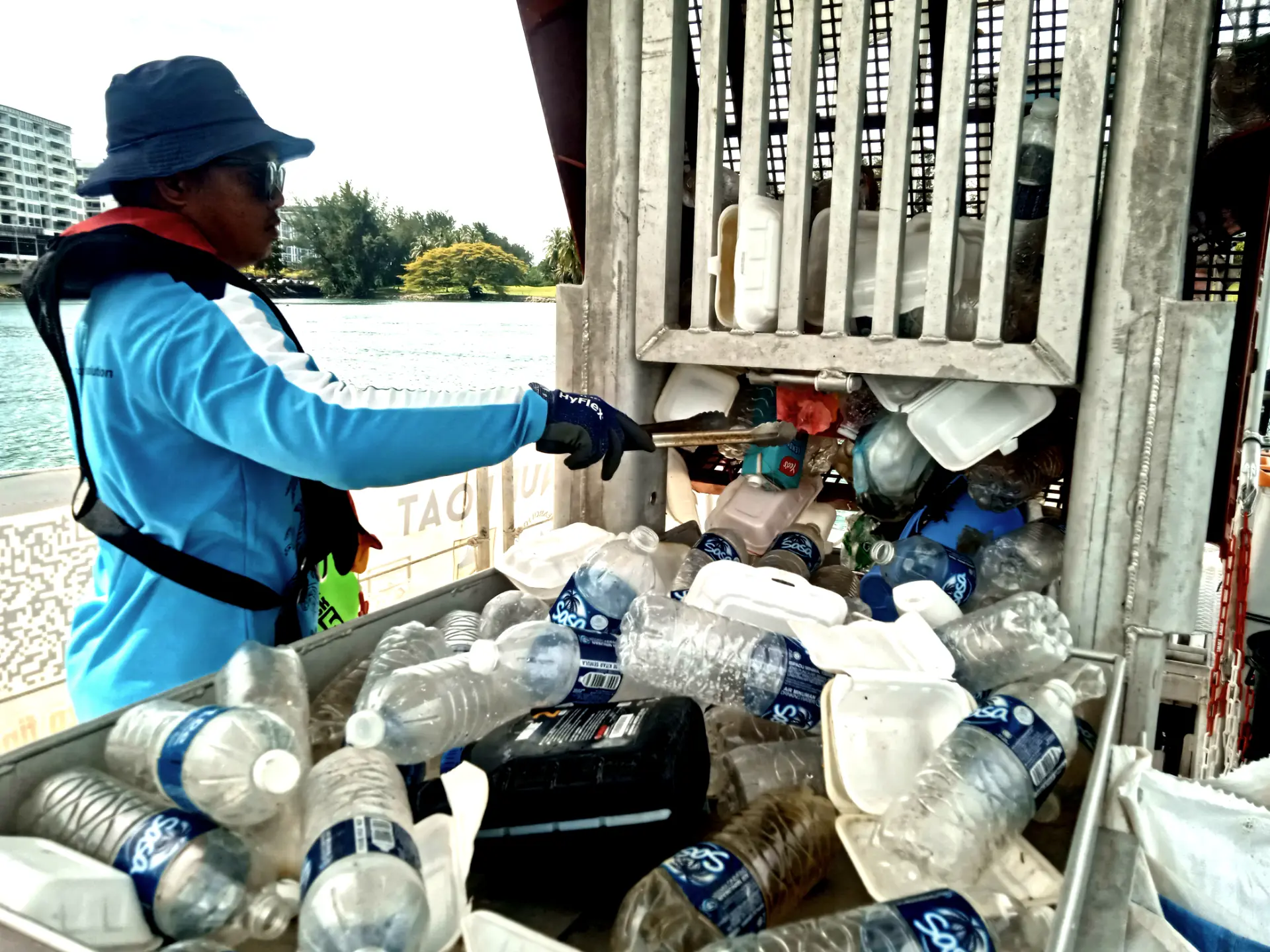
Since the official launch in Kota Kinabalu in April 2025, the Mobula 8.2 has delivered measurable results against plastic pollution in coastal and inshore waters, in partnership with Marine Research Foundation. This project proves a simple idea: when you intercept waste close to where it leaks, you protect marine life, and you also improve daily life for coastal communities.
From April to December 2025, Mobula 8.2 removed more than 135,000 pieces of marine debris, around 2 tons of waste, and managed to send half of it to recycling.
Operations covered 5 priority zones around Kota Kinabalu Bay and Gaya Island, focusing on accumulation hotspots near settlements, tourism areas, and water villages. By June, the vessel expanded to 7 days per week, with trained full-time and part-time crew maintaining consistent coverage, even through challenging monsoon conditions later in the year.
Closing the loop: from waste to community assets
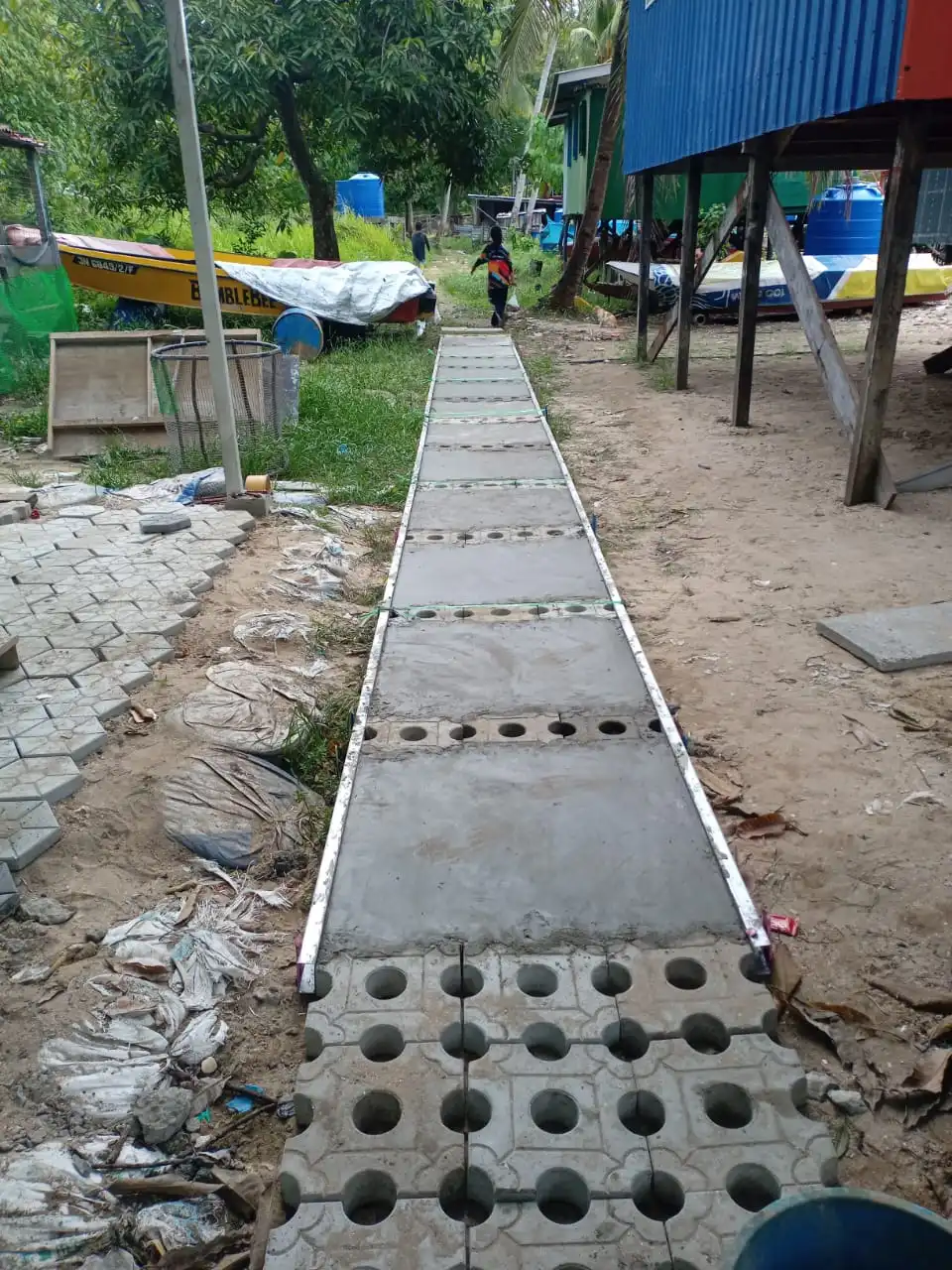
Collection is only the start. With local organisations and recycling centres, the project piloted practical circular solutions. Nearly 630 kilograms of recyclable plastics were processed, and a particularly concrete outcome was delivered with Meraki Daat and local villagers: 419 ecobricks produced and used to build more than 61 meters of community walkways on Gaya Island. This is what “circular” looks like when it is real, visible, and useful.
Awareness, capacity, and local ownership
The initiative has engaged stakeholders at multiple levels, from participation in regional policy discussions on plastic pollution to on-vessel demonstrations for funders, partners, and international visitors. Most importantly, local villagers have been trained in sorting, recycling practices, and ecobrick production, building skills that support long-term ownership and sustainable livelihoods.
What is next in 2026, and why support matters
In 2026, the project’s priorities are clear: maintain daily operations, increase the share of waste sent to recycling, expand partnerships to better process mixed plastics, and raise regional visibility to unlock replication across Southeast Asia.
If you want to turn ocean concern into measurable progress, this is where your support lands: on the water, in the sorting chain, and in the hands of local teams.
